
And the groundhog greets us daily: fatigue as a chronic companion.
Severe restrictions in everyday life due to dejection, tiredness and listlessness: this is roughly how fatigue can be described, which in turn stands colloquially for chronic fatigue syndrome, or CFS for short. In German, the term is chronic fatigue syndrome. The chronic feeling of exhaustion and weakness can make itself felt both physically and mentally: It should not be confused with classic tiredness, i.e. a lack of restful sleep. Tiredness is usually temporary, whereas fatigue is a state of extreme chronic exhaustion.
If states of exhaustion cannot be improved by sufficient rest and recovery cycles, for example, and coping with everyday life increasingly becomes an insurmountable task, this may indicate fatigue. It is often referred to as a condition that lasts longer than six months. The lack of energy and physical and mental limitations severely restrict the quality of life of those affected, as motivation and concentration can no longer meet everyday demands. It can also be a concomitant symptom of various illnesses, which is why doctors must use a process of exclusion when making a diagnosis.
Differentiation from ordinary fatigue
Fatigue can occur, for example, as a deficiency symptom due to insufficient exercise, an unbalanced diet and poor sleeping habits. A feeling of exhaustion also occurs after physical and mental exertion. Social, physical and psychological factors also play a major role. Monotonous working conditions or boredom can lead to tiredness, as can long, intensive nights. Fatigue can also be caused by allergies or medication for various illnesses.
The good news is that the condition can be improved quickly with the help of sleep and rest.
Getting to the bottom of the matter
1. sleep
The first thing you should do is look at your own sleeping habits: Am I getting enough sleep? The optimum amount of sleep is very individual and depends on various factors. The results of sleep research can be used as a guideline. These show that seven hours of sleep is ideal for most adults. Longer or shorter sleep phases can again lead to poor performance. Frequent travel, especially through different time zones or an excessive lifestyle, a lot of alcohol or the abuse of other substances are also often responsible for insufficiently restful rest phases.
2. nutrition
The next step is to scrutinize your own diet: Am I getting enough nutrients? Is my body being supplied with enough energy? Malnutrition and weight loss often go hand in hand with reduced performance. If you take a close look at common foods, sooner or later you will come across the term "soup coma". Carbohydrates are a driver of fatigue. Simple carbohydrates, which are contained in pasta and rice, lead to a rapid increase in blood sugar levels. Insulin is immediately released and is responsible for postprandial somnolence, also known as the midday slump. If we rely heavily on sugar, processed oils and simple carbohydrates, our cortisol levels rise and our body becomes sluggish instead of invigorated. Nutrition should be wholesome and feed our energy stores. Iron and vitamin B12 are absorbed through food. A deficiency can impair the function of red blood cells and can be caused by a vegan diet, for example. The result: tiredness. If you decide to stop eating meat, it is essential to find out about alternative sources of vitamins and nutrients. Although the production of vitamin D is primarily associated with natural sunlight, it can also be boosted to some extent with the help of dietary supplements. The daily intake of supplements helps to cover the need for essential nutrients, vitamins, trace elements and amino acids.
3. movement
A healthy level of physical exercise is essential for a healthy lifestyle. Too little exercise is directly linked to a persistent feeling of tiredness and exhaustion. There are several hypotheses on this. Physical exertion increases energy consumption and promotes muscle building, whereas prolonged inactivity leads to muscles becoming weaker and less energy being produced. The circulation barely gets going and you feel tired and tired. Regular exercise also improves the quality of our sleep: we fall asleep faster and sleep longer. In everyday life, a good night's sleep pays off through increased performance. Another factor is the strengthening of our immune system. If the body is less busy counteracting inflammation and infections, it has more capacity to cope with everyday life
Highway to well
If illnesses can be ruled out with the help of a doctor, it makes sense to take measures to positively influence your own lifestyle.
Nutrition:
Sufficient calories (eat enough)
Balanced diet (lots of vegetables, nutrient-rich, organic quality)
Tips:
It is better to eat high-quality organic meat once a week instead of several times of inferior quality
Eat the rainbow: Fresh food in different colors to consume as many different nutrients as possible
via vegetables and fruit
Healthy habits: Integrate health-promoting routines into everyday life. e.g.: Start each day with a glass of water
with lemons and Himalayan salt
Sleep habits:
Reduce stress (no blue light, no news)
The bedroom should be cool, dark & quiet
No heavy food before going to bed
Tips:
A warm bath can help you find peace more easily
Introduce rituals (e.g. meditation or reading a book).e.g. meditation or reading a book)
Sport:
Finish two hours before going to bed (sport has an activating effect)
Regularly (integrate routines into everyday life)
Fresh air
Tips:
Find what you love: The goal should be motivation and enjoyment of sport
Get help: Working with a coach provides additional motivation and important support for your new practice
Time out:
Get out into nature
Consciously leave the daily grind behind
Listen to your own body
Tips:
Practice self-love: Breathing exercises, leaving toxic relationships behind, setting life
Benefits
Modern preventive medicine: our therapy recommendations
Many modern living conditions affect our well-being: This starts with poor quality food and ends with an unbalanced work-life balance. It is therefore important to take measures in good time to prevent exhaustion.
Medical advice
Dr. Skudnigg is on hand with comprehensive medical advice to help patients achieve a better sense of well-being. With the help of DNA screening, micronutrient and blood analyses, as well as other diagnostic measures, he puts together customized therapy concepts.
IHHT Cell - Reverse - Aging
Is a type of cell therapy that helps with chronic fatigue, exhaustion and immune deficiency. Our body is made up of cells that are damaged by stress and unhealthy habits. Symptoms such as fatigue develop. Altitude training helps to remove damaged cells and produce new ones. More information here.
NAD+ therapy
Has a cell-renewing effect, protects against tiredness, exhaustion and immune deficiency. NAD+ is found in each of our cells, counteracts ageing processes and promotes the production of energy. More information here.
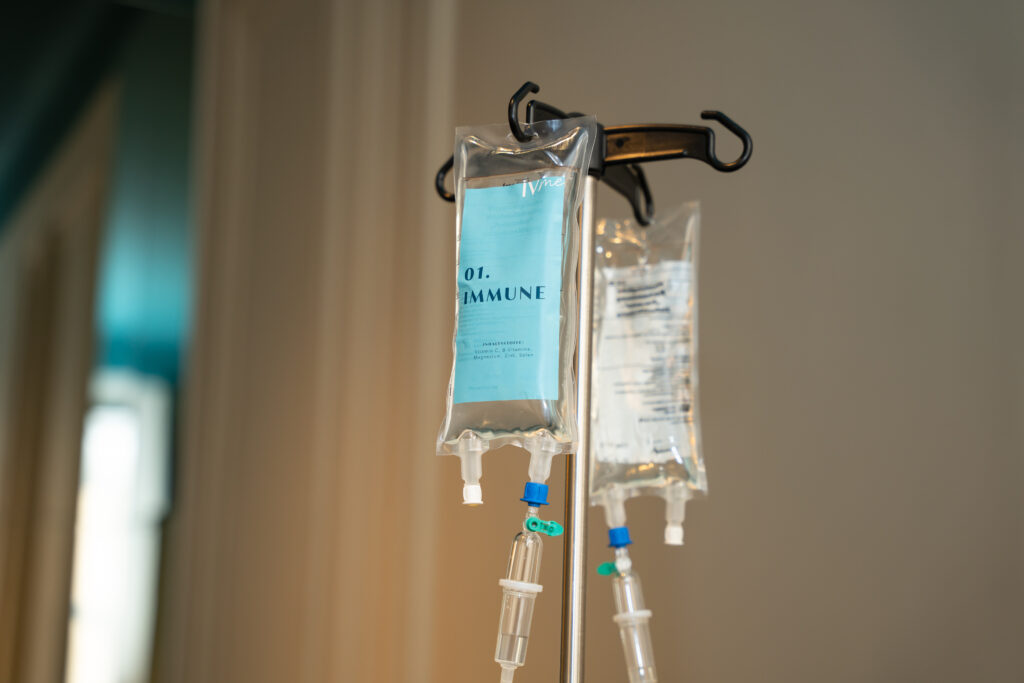
Vitamin C infusion
Antioxidant that scavenges free radicals and protects the cells (also against fatigue)
Gluthation infusion
Scavenges free radicals and is essential for restful sleep
For all those interested, our sources to read up on
https://deutsche-fatigue-gesellschaft.de/fatigue/diagnose/
https://www.ncbi.nlm.nih.gov/pmc/articles/PMC2766938/
https://blog.lykon.com/de/artikel/gesundheit/staendige-muedigkeit/amp/#Quellen
https://www.nature.com/articles/s41467-022-34624-8
https://www.deutsches-schilddruesenzentrum.de/wissenswertes/schilddruese-und-psyche/#:~:text=Im%20Fall%20einer%20Schilddr%C3%BCsenunterfunktion%20klagen,bis%20hin%20zu%20Suizidgedanken%20reichen
https://www.who.int/emergencies/diseases/novel-coronavirus-2019/media-resources/science-in-5/episode-47—post-covid-19-condition?gclid=CjwKCAjwrpOiBhBVEiwA_473dEzV8S1GoAfSmCzrnvr10CXE0xRV4uxY7TsY6ZUFtm9IcfZFVsFeLhoCIMkQAvD_BwE
https://www.ncbi.nlm.nih.gov/pmc/articles/PMC4664449/Puetz et al., 2006 https://pubmed.ncbi.nlm.nih.gov/17073524/Neuropsychobiology. 2009;59(4):191-8. doi: 10.1159/000223730. Epub 2009 Jun 10.
https://pubmed.ncbi.nlm.nih.gov/19521110/